Journal · Building eras
New Construction vs. Pre-War: What Actually Changes for a Renter
Both eras have real strengths. Here is what each one gives you and gives up, on the things you live with every day.
9 min readJune 9, 2026
The short answer
Neither era is better in the abstract. The right one depends on which tradeoffs you can live with.
- New construction tends to win on the systems you use daily: in-unit laundry, central heating and cooling, an elevator, and step-free, modern wiring. Pre-war tends to win on character, ceiling height, and the quiet of solid plaster walls.
- New buildings usually bundle the amenities, in-unit washer and dryer, central air, parking, a gym, that older buildings rarely have, which is part of why they rent for more.2
- Pre-war buildings, generally built before 1939, are prized for thick walls, high ceilings, and detail. The trade is older systems, fewer elevators, and amenities that have to be retrofitted, if they can be added at all.
What the labels mean
Two eras, two sets of priorities
The honest way to compare them is not which is nicer, because both can be beautiful, but which set of tradeoffs fits how you live. Below we walk through the eight things that most decide day-to-day comfort, then a clear guide to which era suits which need. The Astelle is new construction, so we have a side, but the comparison itself is straight.
Side by side
New construction vs. pre-war, axis by axis
| What you compare | New construction | Pre-war |
|---|---|---|
| Sound insulation | Modern assemblies and resilient channels can be quiet, but lighter partition walls sometimes carry more neighbor noise | Thick plaster walls are a genuine sound barrier; quiet between units is a classic pre-war strength |
| In-unit washer and dryer | Common, and increasingly standard in new buildings | Rare; some pre-war buildings prohibit it outright or only allow it over wet spaces |
| Light and windows | Large modern windows and open layouts; floor-to-ceiling glass is common | Generous windows and high ceilings, but older glazing and sometimes deeper floor plates |
| Energy and heating | Central heating and cooling, better insulation, lower typical energy waste | Often steam radiators and window units; less control and more drafts |
| Finishes | New kitchens and baths, contemporary fixtures, consistent quality | Original detail and craftsmanship, though some elements may be aging |
| Layout efficiency | Efficient, open plans with usable square footage and ample closets | Distinct rooms, foyers, and quirks; charming but sometimes less efficient |
| Elevators and access | Elevators and step-free entry are the norm | Many smaller pre-war buildings are walk-ups |
| Maintenance | New systems mean fewer surprises early in a building's life | Older plumbing, wiring, and systems can need more attention |
Source: Pre-war vs. post-war pros and cons, CityRealty (the amenity and laundry notes).
The reasoning
Why the table reads the way it does
Sound and walls
New construction answers this with engineering rather than mass: resilient channels, insulated assemblies, and double-glazed windows that close out street noise. A well-built modern wall can be very quiet. The difference is that pre-war quiet comes from the structure itself, while new-construction quiet comes from how carefully the building was detailed.
Systems and amenities
Pre-war buildings can be retrofitted, but often only partially: a washer and dryer may not be allowed where the plumbing cannot support it, and central air is hard to add to a steam-heated building. If a modern amenity matters to you, new construction is far more likely to simply have it.
Character and layout
Where pre-war answers back is character. High ceilings, original moldings, hardwood, foyers, and rooms with a sense of proportion are hard to reproduce, and many renters love a place with history in its bones. That detail is the reason pre-war holds its appeal even as systems age.
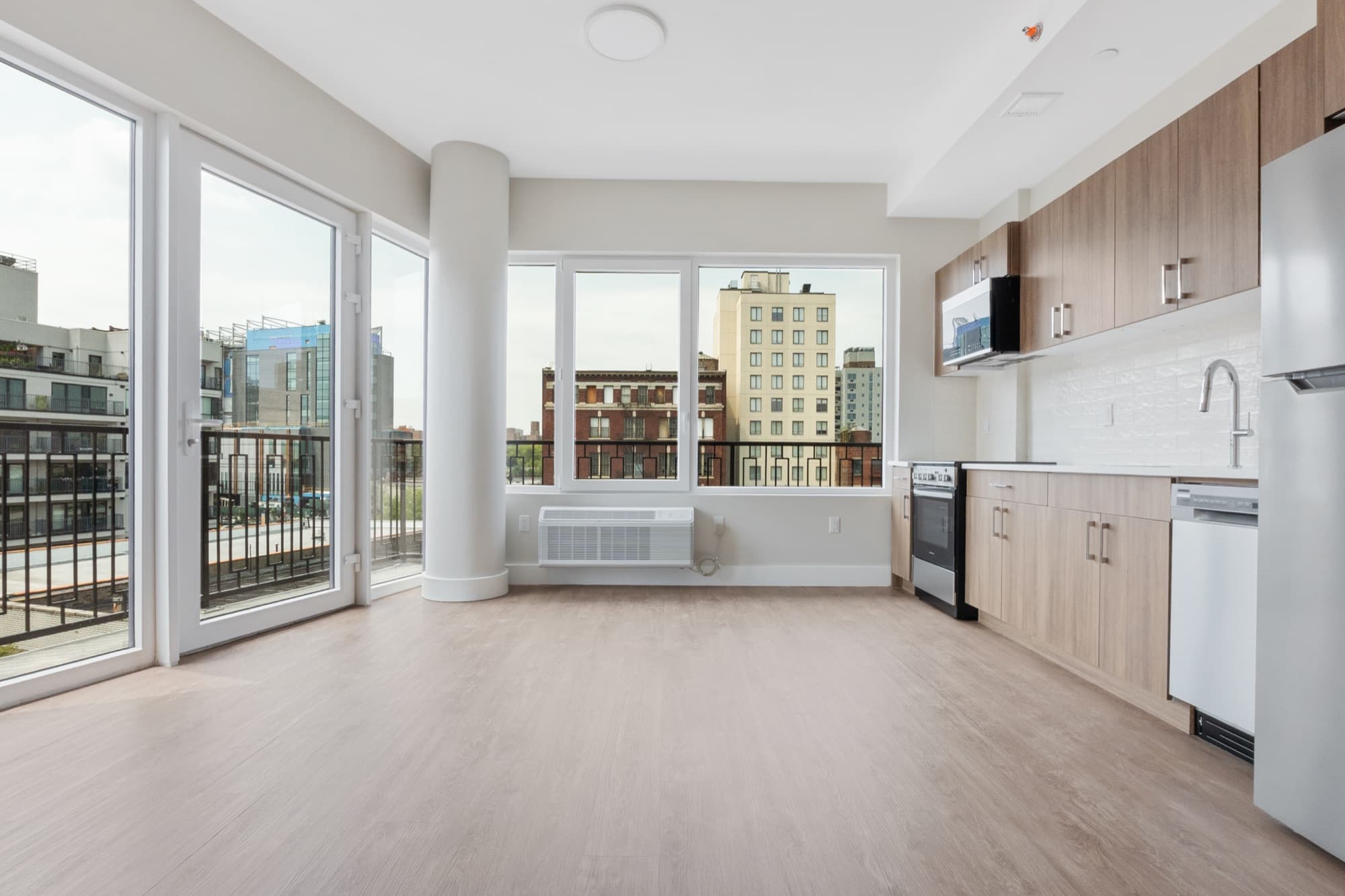
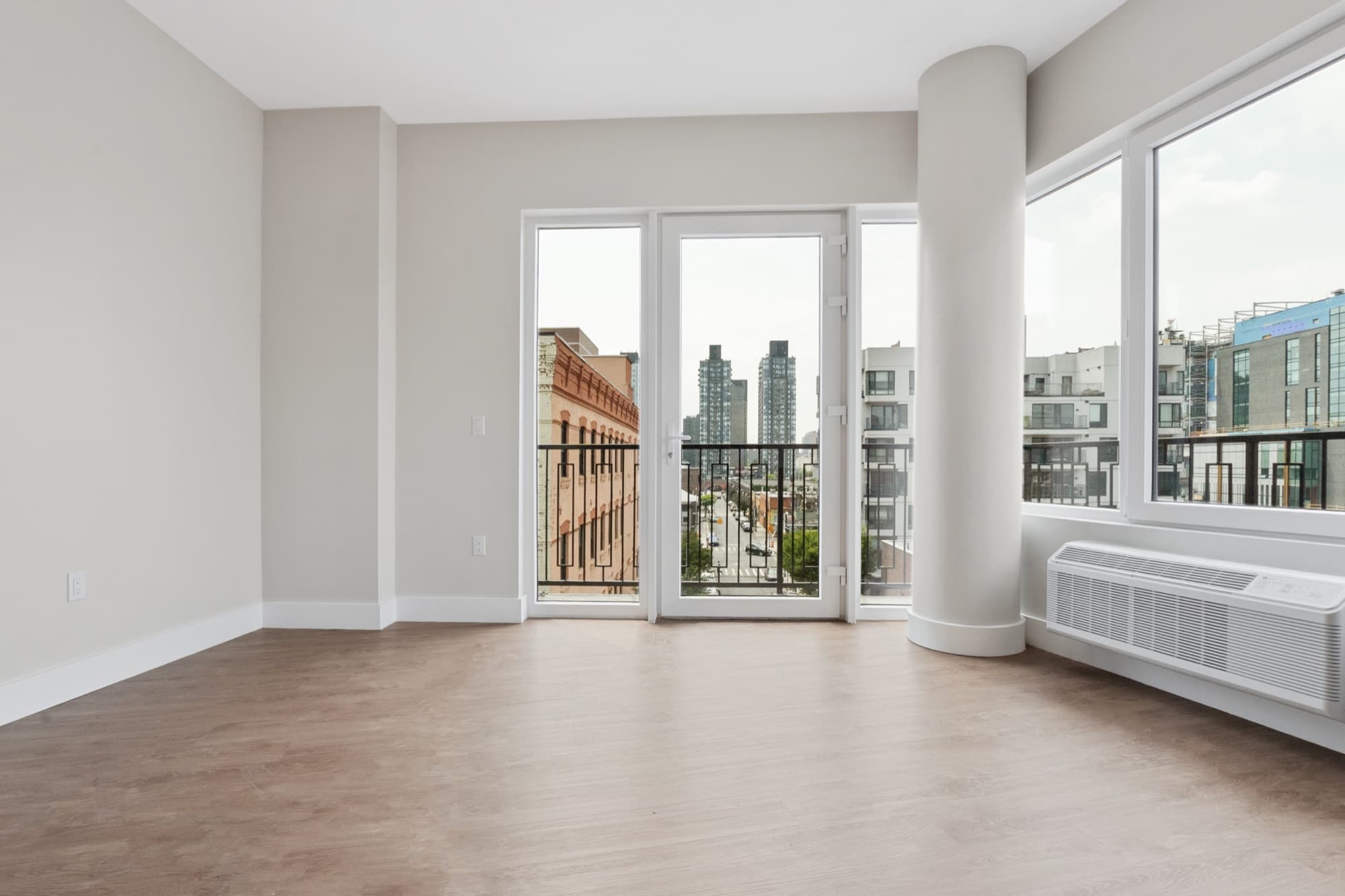
New construction trades some of that romance for efficiency: open plans, usable square footage, real closets, and large windows. At The Astelle, the new-construction layouts are drawn for how people actually live now, with the light and the storage built in rather than worked around.
Choosing
Which to choose, by what you need
Pick by the tradeoffs that matter most to your household, not by which era sounds more impressive. Here is the honest guide.
Choose new construction if
- You want in-unit laundry, central heating and cooling, and an elevator without retrofitting anything.
- You value efficient layouts, large windows, real closet space, and amenities built into the building.
- You would rather not deal with aging systems and prefer the predictability of new construction.
Choose pre-war if
- Quiet between units and high ceilings matter more to you than modern systems.
- You are drawn to original detail, distinct rooms, and a sense of architectural history.
- You are comfortable trading some convenience and amenities for character.
Sources
- Pre-war architecture (the roughly 1900 to 1939 era, plaster walls, high ceilings, and soundproofing), Wikipedia
- Pre-war vs. post-war: pros, cons, and featured listings (the new-construction amenity cluster), CityRealty
- More NYC apartments now have washer-dryers, is it worth the extra cost (the in-unit laundry rent premium), Gothamist
Plan a visit
See what new construction feels like.
In-unit laundry, central air, an elevator, and a doorman, in a 2025 new-construction building. Come walk a residence and judge for yourself.